Skip To Content

General Dentist in NYC

Dental wellness through routine visits is a cornerstone of CPW Dentistry.

We want to help keep you and your teeth strong and healthy. We’ll help you define goals for your health and image, find the care that’s relevant to your lifestyle, and support you every step of the way. Our hygienists and dentists are happy to see each member of your family for regular appointments, from children to great-grandparents.

Book an appointment

General dentistry, thoughtfully delivered

  • During routine dental wellness visits, a dental hygienist uses special tools like a Cavitron to clean your teeth and remove built-up plaque and tartar that you can’t remove at home even with regular brushing and flossing. The official dental term for this is “dental prophylaxis.” Prophylaxis literally means “action taken to prevent disease, especially by specified means or against a specified disease.” By seeing us for regular visits, you and your family can prevent cavities and gum disease, and keep your teeth in optimal shape!

    Regular check up exams also take place during dental wellness visits. One of our dentists will review your x-rays and look at your teeth for any early signs of decay or other abnormalities that might not have become painful yet. The earlier we find an issue, the easier and less expensive it is to help you fix it.

  • The iTero® Element™ Scanner uses a “wand” with a gentle laser to painlessly take an incredibly detailed impression of your teeth and gums. There’s no goo and no radiation. Once the scan is complete, you’ll immediately be able to see a digital model of your entire mouth. Digital x-rays help diagnose problems with your teeth and jaw and can show our providers decay and bone loss that might not be visible yet. We use digital x-rays that are safe and emit an extremely small amount of radiation. We can even take panoramic, and 3-D cone scan images.

  • Oral cancer screenings detect mouth cancer or abnormal tissues that may lead to mouth cancer while they are still at an early stage.

  • In-office fluoride treatments provide preventative topical application of fluoride in a much stronger concentration than you find in toothpaste or mouthwash available over the counter. Fluoride is a mineral that helps to prevent tooth decay, reduces sensitivity, and can even help repair teeth in very early (microscopic) stages of decay. Insurance doesn’t usually cover fluoride for adults, so it is an additional optional $30 fee. It is included in our hygiene membership packages,

  • Sealants are a bit of tooth-colored material used to seal the grooves in your teeth that a toothbrush bristle can’t reach and act as a protective barrier against cavities. They are usually applied to the chewing surfaces of the back teeth, where decay occurs most often. Learn more about Sealants on our blog.

  • If we notice signs of nighttime grinding or clenching (aka “Bruxism”) then we will probably suggest a custom-fitted tray that covers your top teeth to protect them from damage. Telltale signs you might be a grinder include flat spots on your enamel, jaw pain, or highly developed jaw muscles. Sometimes, the force of grinding can make teeth break, crack, become sensitive, or cause gums to recede.

  • We use models, photos, and animations to show the whole family how to make the most of their home care and to understand recommendations for treatment. We’ll also take the time to go over options in detail, finding the ideal treatment plan to fit your needs, wants, and budget.

Reverse early cavities without drilling or discomfort

Now offering: Curodont. A breakthrough treatment that helps your teeth heal themselves.

  • Modern Cavity Prevention

    Curodont represents the next generation of minimally invasive dentistry. It’s designed to stop early decay before it becomes a cavity.

  • Backed by Advanced Science

    Using a patented peptide formula, Curodont encourages natural remineralization and helps strengthen weak spots.

  • Comfortable & Noninvasive

    Curodont can help repair early cavities without needles, drilling, or discomfort. Just a quick, painless application.

FAQs About General & Family Dentistry

  • A dental wellness visit covers everything your smile needs to stay healthy, all in one appointment. Your visit begins with a professional cleaning by one of our dental hygienists, who will use specialized tools, including a Cavitron, to remove plaque and tartar buildup that regular brushing and flossing can’t reach.
    We’ll also measure your gum health through a process called periodontal probing, where we gently check the depth of the pockets between your teeth and gums. This helps us detect early signs of gum disease before it progresses. An oral cancer screening is performed yearly  One of our dentists will also complete an exam, reviewing your digital X-rays and inspecting your teeth for early signs of decay or other concerns. Catching issues early means treatment is typically simpler and less costly. We’ll also apply a professional-strength fluoride treatment that helps prevent cavities, reduce sensitivity, and strengthen your enamel between visits.
    Finally, we’ll wrap up with personalized dental health tips tailored specifically to you. Using models, photos, and animations, we’ll walk you through what we found and give you practical at-home care recommendations so you leave feeling informed and confident about your oral health.

  • Most people benefit from dental wellness visits every six months. Routine checkups allow us to monitor your oral health, perform preventive cleanings, and identify any developing issues. If you have signs of gum disease or other concerns, we’ll probably recommend more frequent visits, usually every three or four months.

  • The iTero® Element™ Scanner uses a small handheld wand with a gentle laser to create a highly detailed 3D digital model of your teeth and gums with no messy impression material and no radiation. The scan is fast, comfortable, and gives you an immediate view of your entire mouth on screen.

  • Yes. We use digital X-rays, which emit a significantly smaller amount of radiation than traditional film X-rays. Digital imaging allows our dentists to detect decay, bone loss, and other issues that may not yet be visible or causing symptoms. We can also capture panoramic and 3D cone scan images for a more complete picture of your oral health.

  • An oral cancer screening is a quick, painless exam used to detect signs of mouth cancer or abnormal tissues at their earliest and most treatable stage. We recommend screenings for all patients since early detection improves outcomes.

  • In-office fluoride treatments apply a concentrated topical fluoride directly to your teeth. They are far stronger than what you’ll find in over-the-counter toothpaste or mouthwash. Fluoride helps prevent tooth decay, reduces sensitivity, and can even reverse microscopic early-stage decay. Fluoride treatments are beneficial for both children and adults. Note: dental insurance typically doesn’t cover fluoride for adults, so there is an optional $30 fee (included in our hygiene membership packages).

  • Sealants are a thin, tooth-colored protective coating applied to the chewing surfaces of back teeth, where cavities are most likely to develop. They seal the deep grooves that a toothbrush bristle can’t fully reach, acting as a barrier against decay. Sealants are especially recommended for children, though adults can benefit too.

  • Bruxism is the clinical term for nighttime teeth grinding or clenching. Signs include flat spots on your enamel, jaw pain, sensitive teeth, or noticeably developed jaw muscles. Left untreated, grinding can cause teeth to crack, chip, or wear down, and may lead to gum recession. We can fit you with a custom nightguard, a comfortable tray worn over your top teeth, to protect against further damage.

  • Yes! Central Park West Dentistry is a family dental practice, meaning we welcome patients of all ages. From children getting their first checkup to adults managing long-term oral health, we tailor care and education to every member of your family. Some children who experience a lot of anxiety at the dentist or require extensive treatment may be referred to a trusted pediatric specialist.

  • We combine advanced diagnostic technology, like the iTero® scanner, digital X-rays, and 3D cone imaging, with a genuinely patient-centered approach. We take the time to educate you so you fully understand what we’re seeing and what your options are. Then we work with you to find the right treatment plan for your needs, preferences, and budget.  We’re also proud to be a welcoming choice for patients with dental anxiety. We know that for many people, even making the appointment takes courage, and we take that seriously. Our team is trained to create a calm, unhurried environment where you’re always in control. We’ll explain everything before we do it, check in with you throughout, and go at whatever pace makes you comfortable. We offer nitrous oxide and you can even watch TV during your appointment.  And because we believe dental health is one of the most important parts of overall wellbeing, we’ve made it as easy as possible to get the care you need. We’re open seven days a week, and you can reach us by email or text whenever it’s convenient for you.

General Dentistry Before & Afters

Loading Sliders

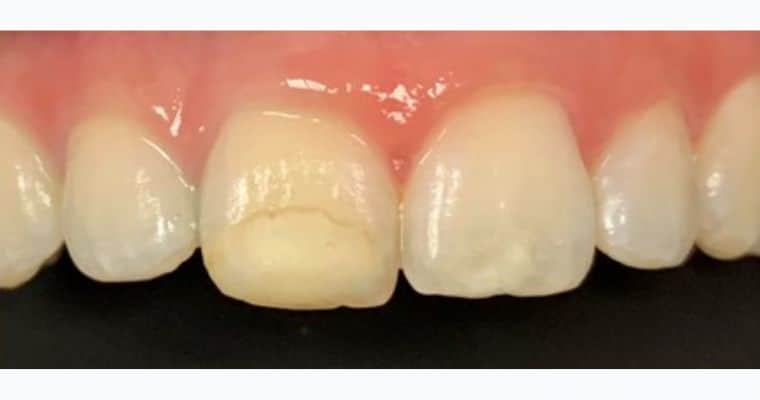
Before. Close-up of upper front teeth showing a visible chip and internal discoloration on the left central incisor (tooth #9). The chipped area appears worn and yellowed, with a rough, irregular surface that stands out from the adjacent teeth.
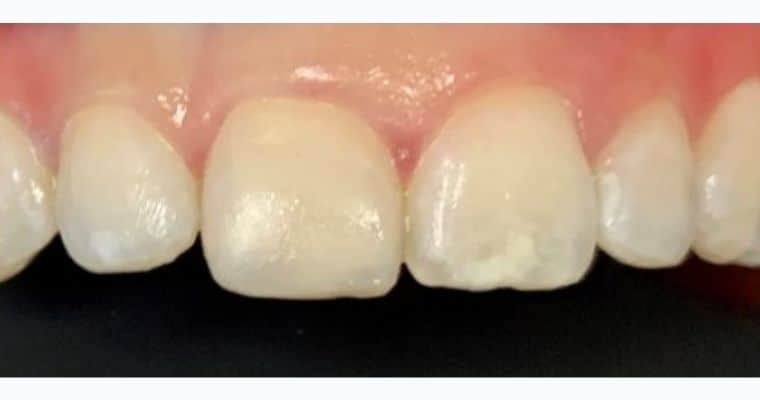
After. Same view after cosmetic repair. The chipped tooth has been rebuilt with a smooth and natural finish. The color now blends evenly with the neighboring teeth, and the incisal edge is clean and well-shaped.
Before. Close-up of upper front teeth showing a visible chip on the lower edge of the left front tooth (tooth #9). The break creates an uneven silhouette, making the front teeth appear asymmetrical.
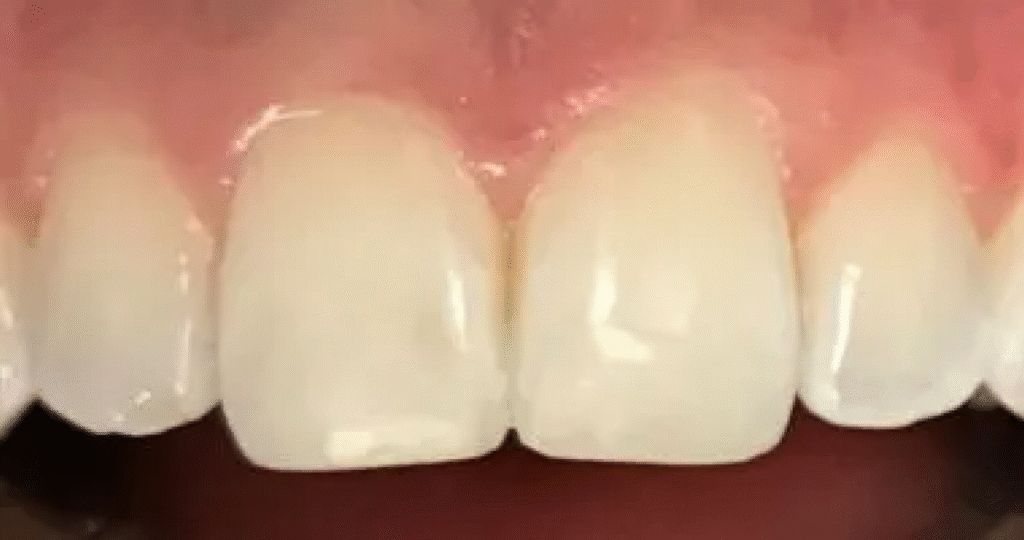
After. Same view following cosmetic repair. The chipped tooth has been smoothed and rebuilt to match the right front tooth. The incisal edges are now even and natural-looking, with a clean, symmetrical finish.
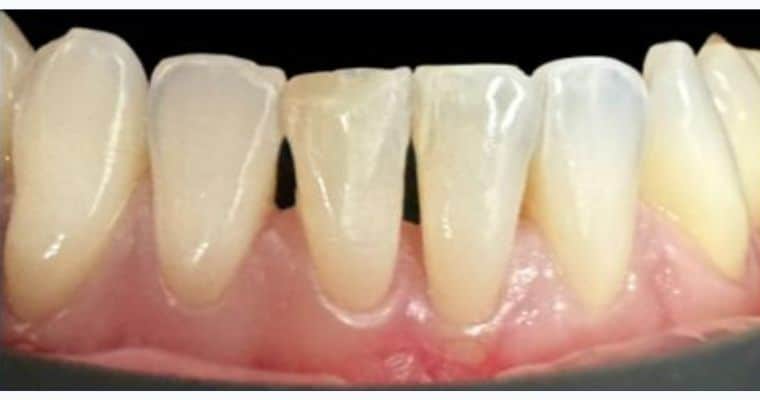
Before. Close-up of lower front teeth showing several black triangles — noticeable gaps between the teeth near the gumline caused by gum recession and loss of tissue volume. These dark spaces create a shadowed, uneven appearance.
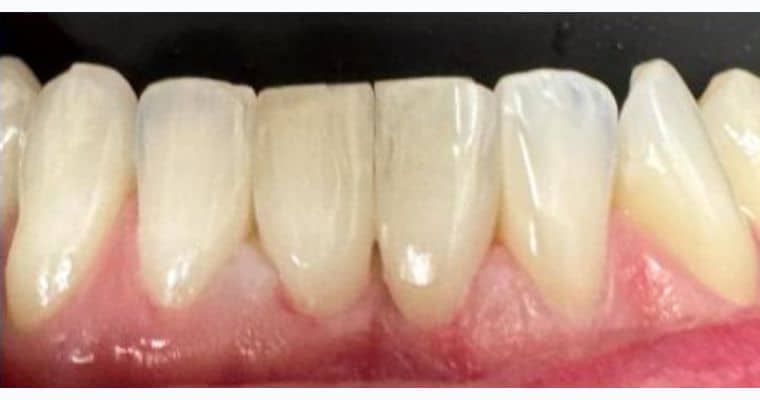
After. Same view after cosmetic treatment. The black triangles have been filled in, creating a more seamless transition between the teeth and gums. The overall look is smoother, with fewer visible gaps and a more uniform smile.
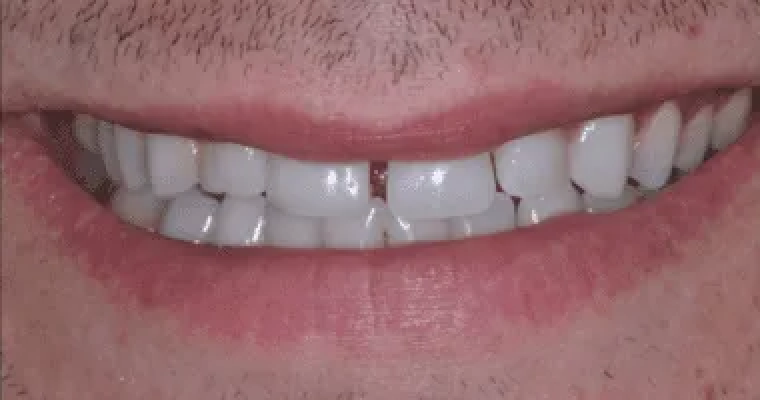
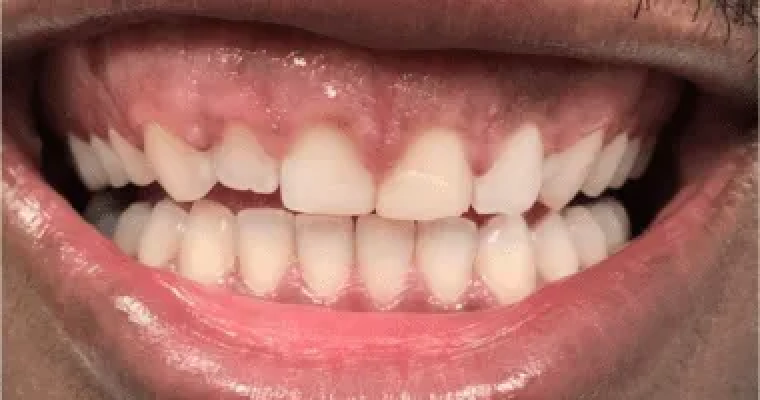
Before. Close-up of a smile showing a visible gap between the two upper front teeth (teeth #8 and #9). The spacing is noticeable when smiling, creating a break in the center of the upper arch.
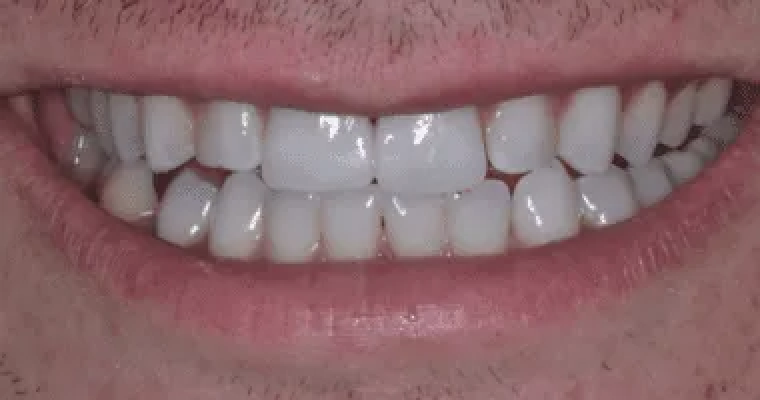
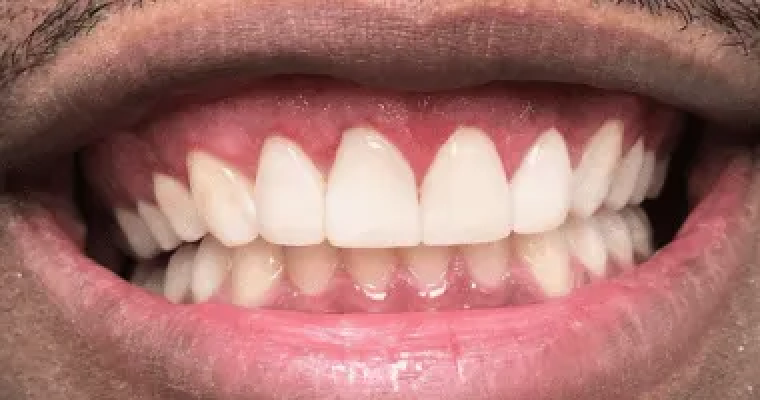
After. Same smile following cosmetic treatment. The gap between the front teeth has been closed, creating a smooth and continuous line across the upper teeth. The overall smile appears more even and cohesive.
Before. Close-up of a smile showing noticeable wear and irregular edges on the upper front teeth. Several teeth appear shorter and more translucent near the tips, and the gumline shows some variation in height.
After. Same smile following cosmetic treatment. The upper teeth have been reshaped to appear longer, more even, and symmetrical. The gumline looks more balanced, and the teeth are smooth, bright, and uniform in color and shape.
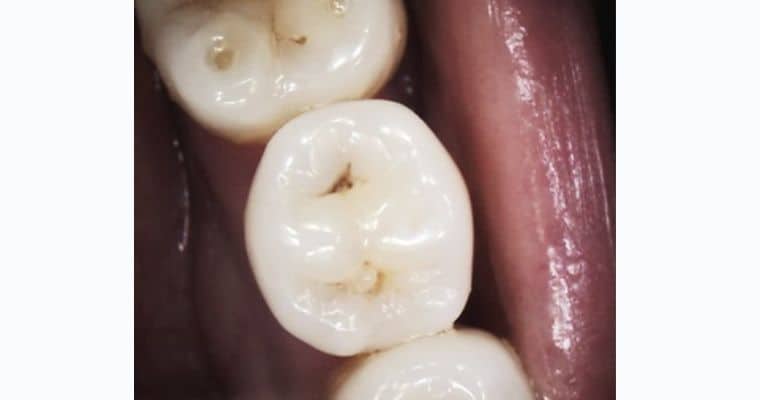
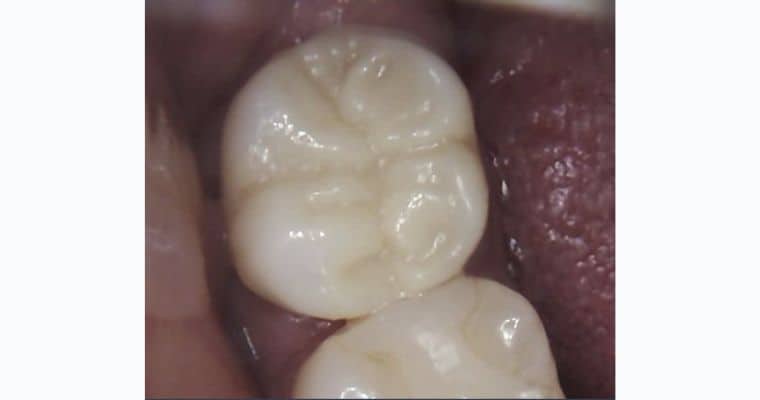
Before. Close-up of a molar with visible dark staining and early breakdown in the center grooves of the chewing surface. The tooth shows signs of wear and potential decay, with visible pits and discoloration.
After. Same view after treatment. The molar has been restored with a smooth, natural-looking white filling. The grooves are sealed and the surface appears clean and healthy, with no visible staining or structural damage.
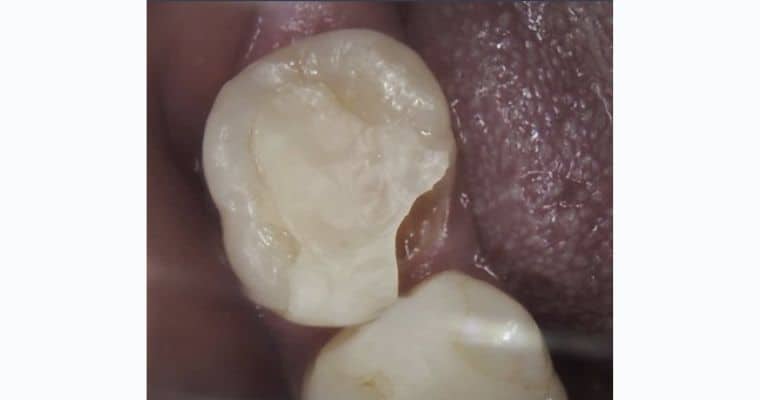
Before. Close-up of a molar with a large area of missing tooth structure. The tooth is visibly worn down with a deep cavity or fracture affecting most of the chewing surface.
After. Same view after restorative treatment. The damaged molar has been fully rebuilt with a smooth, tooth-colored crown. The chewing surface is now intact and anatomically shaped, restoring both function and appearance.